
Best USMLE Prep Courses in 2026

by John Reed· Last Updated: Nov 26, 2026
The best all-round USMLE Step 1 prep course is Med School Bootcamp. One subscription covers 1,671+ video lessons and 11,696+ board-style questions, and it costs $49 for one month or $299 for one year.
If you only want video teaching, Boards & Beyond is the full-curriculum option mapped to First Aid, and Pathoma is the pathology course that sits on almost every Step 1 stack.
A prep course is where you learn the material. It gives you structure, explanations and an order to study in. It does not replace a question bank or an official practice exam, and two of the three courses here are meant to be paired with other resources.
Here are the main takeaways:
- Med School Bootcamp: Best for one subscription that includes videos, questions and a schedule. 1,671+ video lessons, 11,696+ board-style questions and a three-day free trial with no card required.
- Boards & Beyond: Best for a full video curriculum during preclinical years. Slides are mapped to First Aid, and subscriptions run from roughly $24 for a week up to about $399.
- Pathoma: Best for learning pathology. About $99.95 buys 18 months of online video access, and some sample chapters are free.
USMLE prep course summary table
| Resource | Cost | Format | What you get | Best for |
|---|---|---|---|---|
| Med School Bootcamp | $49 (1 month), $299 (1 year), $549 (2 years) | Videos, question bank, PDF outlines | 1,671+ video lessons, 11,696+ board-style questions, nine-week study schedule, Anatomy Bootcamp | Students who want one platform for content and questions |
| Boards & Beyond | About $24 for a week up to about $399 | Full-curriculum videos with questions and flashcards | Video lectures across the Step 1 syllabus, slides mapped to First Aid | Preclinical students building foundations |
| Pathoma | About $99.95 (18 months online), about $120 with the book | Video lectures plus companion book | Pathology videos with Dr. Sattar, Fundamentals of Pathology book, free sample chapters | Every Step 1 student, for pathology only |
Which USMLE prep course is right for you?
- If you need videos and practice questions in one place, use Med School Bootcamp.
- If you need a video course that follows First Aid so your annotations line up, use Boards & Beyond.
- If you need pathology to make sense, use Pathoma and watch chapters 1 to 3 early.
- If you need a refund option after a failed attempt, use Med School Bootcamp on a 1-year or 2-year plan, which carries a pass guarantee with strict conditions.
- If you only have a short dedicated window, a question bank may take priority over a long video course. Compare the Step 1 question banks first.
The USMLE prep courses we reviewed
1. Med School Bootcamp
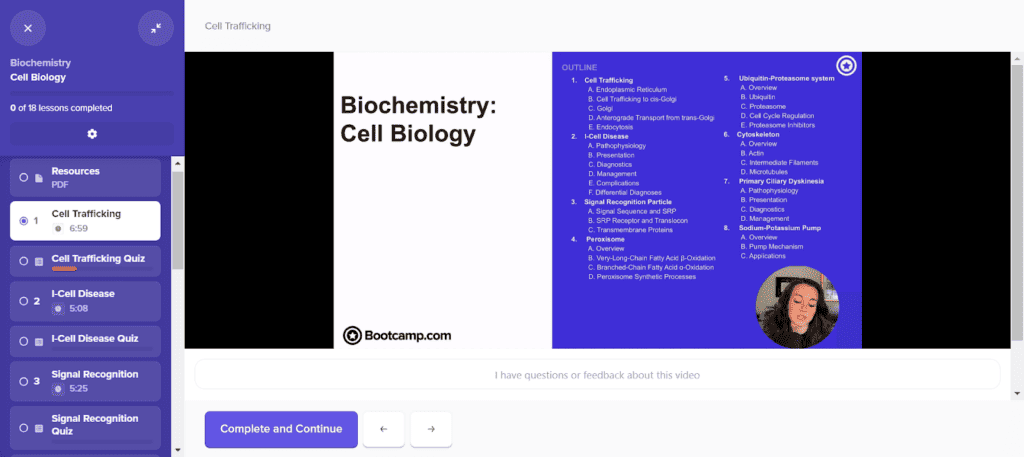
Med School Bootcamp is a self-paced Step 1 course that aims to be an all-in-one resource, with video lessons, a question bank and study tools under a single subscription.
What you get:
a) 1,671+ video lessons: Segmented, captioned videos with adjustable playback speed and a transcript. Each lesson comes with a printable PDF outline of the slides.
b) 11,696+ board-style questions: These simulate the Step 1 interface, with lab values and a calculator. Shorter Question Bites follow lessons for recall. Both types explain every answer choice.
c) A nine-week study schedule: Tasks are marked for morning or afternoon, with no hour-by-hour allotments.
d) Anatomy Bootcamp and Anki integration: The anatomy course covers gross anatomy, neuroanatomy, histology and embryology, with practical exams. We review it separately as Anatomy Bootcamp. The course also integrates with AnKing v12.
e) A three-day free trial: You sign up with an email address only. In our testing nothing was restricted during the trial.
Best for: Students who want one platform for both content review and questions, and who will use it across med school classes and Step 1 prep.
Limitation: There are no live classes and the nine-week schedule cannot be customized. The outlines are the only written material. When we last checked the curriculum, four sections were still incomplete (biochemistry, endocrinology, microbiology and musculoskeletal), so confirm coverage in the free trial. The pass guarantee only applies to 1-year and 2-year plans bought at least 30 days before your exam.
2. Boards & Beyond
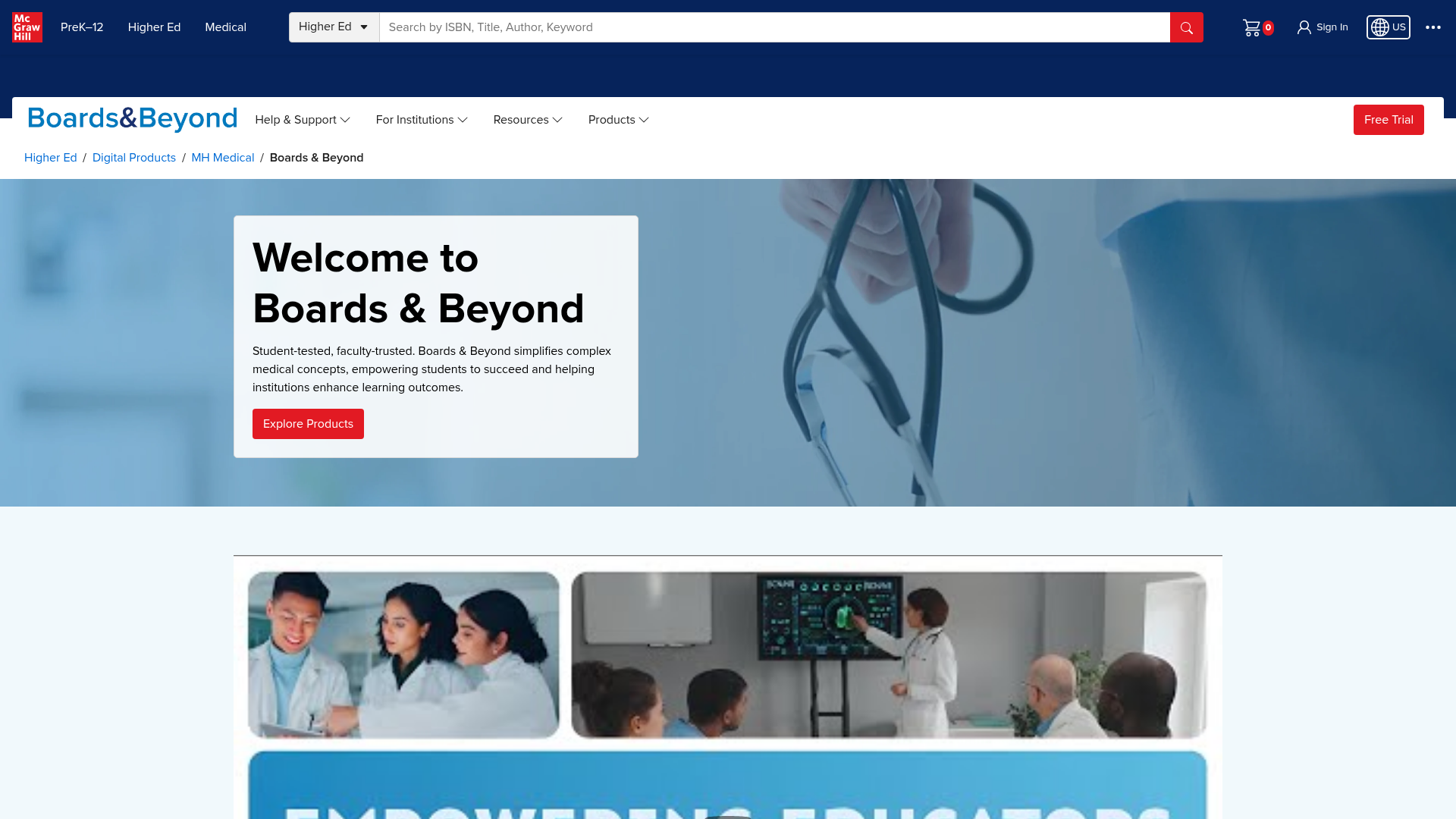
Boards & Beyond is Dr. Jason Ryan's video course covering the whole Step 1 curriculum, built to teach each topic from the ground up.
What you get:
a) Full-curriculum video lectures: One coherent course across physiology, pharmacology, microbiology, pathology and more.
b) Slides mapped to First Aid: The mapping means your annotations line up with the book. See our guide on how to use First Aid for Step 1.
c) Integrated questions and flashcards: You can reinforce each block without switching tools.
d) Flexible subscriptions: Roughly $24 for a week up to about $399 for the longest plans, so you can match the cost to your timeline.
Best for: Preclinical students who want to learn topics as their classes cover them, then move to First Aid and UWorld for dedicated study.
Limitation: The volume. Starting it in a short dedicated period is possible but time-intensive, and it adds little if your school lectures already cover the material well.
3. Pathoma
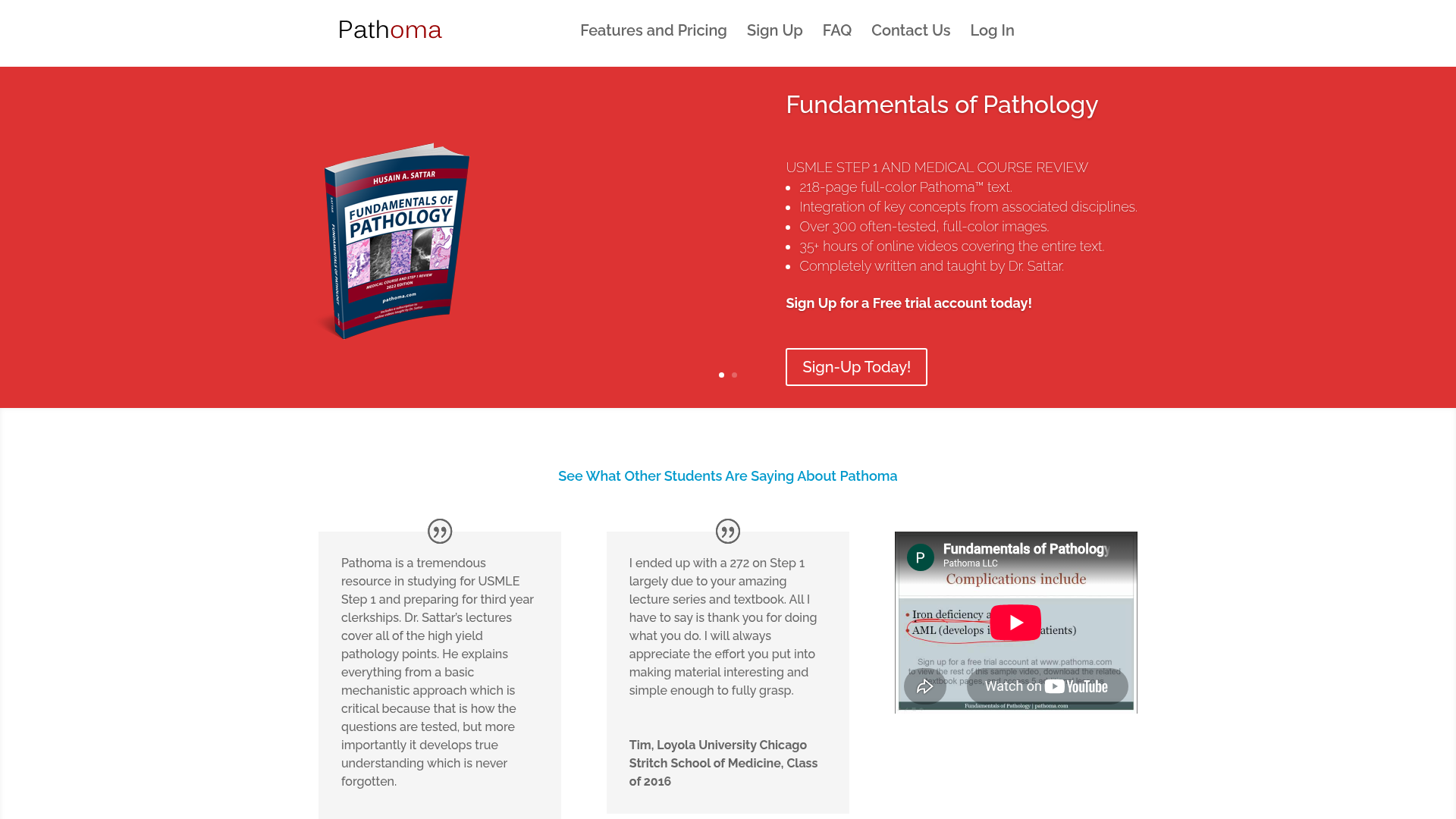
Pathoma is Dr. Husain Sattar's pathology course, which pairs short video lectures with the Fundamentals of Pathology book.
What you get:
a) Pathology video lectures: Short, high-yield videos that turn dense pathology into clear, logical explanations.
b) The companion book: Fundamentals of Pathology is synced to the videos and designed for annotation, so it becomes your pathology reference alongside First Aid.
c) Chapters 1 to 3 on the fundamentals: Cellular injury, inflammation and neoplasia. The rest of pathology builds on these.
d) 18-month online access: About $99.95 for video access, or about $120 for the book-plus-online bundle. Sample chapters are free to preview.
Best for: Any Step 1 student who wants concise primary teaching for pathology.
Limitation: It covers pathology only, on purpose. You still need a broad course and a question bank for everything else.
How to use these together
- Set your timeline first. Our Step 1 study plan and guide on when to take Step 1 help you decide how many weeks you have.
- Pick one main course. Use Boards & Beyond during preclinical years, or Med School Bootcamp if you want videos and questions together. Take Bootcamp's three-day trial before paying.
- Add Pathoma for pathology. Start with chapters 1 to 3 and annotate the book as you go.
- Move to questions. Pair your course with a question bank such as UWorld and keep First Aid as your reference.
- Check yourself with official material. Use the Step 1 practice tests before test day.
If the budget is tight, our list of free USMLE Step 1 resources covers what you can use at no cost. Everything else we have reviewed is on the USMLE hub.
USMLE prep course FAQs
What is the best prep course for USMLE Step 1?
Med School Bootcamp is the best single course if you want videos and questions together, with 1,671+ video lessons and 11,696+ board-style questions. Boards & Beyond is the strongest video-only foundation, especially when started in preclinical years. Pathoma is the standard for pathology and works alongside either one.
How much does a USMLE prep course cost?
Med School Bootcamp costs $49 for one month, $299 for one year or $549 for two years. Boards & Beyond runs from roughly $24 for a week up to about $399 for the longest plans. Pathoma is about $99.95 for 18 months of online access, or about $120 with the book.
Is Pathoma enough for Step 1?
For pathology, it is the standard. It covers only pathology, though, so you need to pair it with a broad course like Boards & Beyond and a question bank like UWorld.
Do I need a prep course if I already have a question bank?
It depends on your foundation and your time. A course teaches content, and a question bank tests it. If you only have a short dedicated window, or your school lectures already cover the material well, the question bank may take priority.
Does any USMLE prep course offer a pass guarantee?
Med School Bootcamp does. If you fail Step 1 you can get a complete refund, but you must have a 1-year or 2-year plan bought at least 30 days before the exam, have reviewed all materials, be in an accredited medical program and provide proof of the failed attempt. For context on the odds, see our breakdown of the Step 1 pass rate.
We may earn commissions from some links on this page, but this does not affect our reviews or your experience.


