
Kaplan vs Blueprint MCAT: Which Prep Course is Better in 2026?

by John Reed· Last Updated: Jan 30, 2026

Kaplan
Includes
- ✓10,000+ total practice questions
- ✓3,000+ customizable QBank questions
- ✓90+ content refresher videos
- ✓18 full-length practice tests
- ✓7-book subject review set
- ✓All official AAMC practice materials
- ✓Personalized study plan and placement quizzes
- ✓Mobile companion app
Pros
- +18 full-length MCAT practice exams
- +Includes all official AAMC practice materials
- +7-book MCAT subject review set included
- +Multiple prep formats: self-paced, live online, and in-person
- +Mobile companion app for QBank, videos, and flashcards
- +Higher score guarantee options (eligibility requirements apply)
Cons
- −Premium pricing versus some competitors
- −Some students find Kaplan full-lengths harder than AAMC material
- −Best guarantee terms are tied to specific programs and strict requirements

BlueprintOur Pick
Includes
- ✓160 learning modules
- ✓500+ instructional videos
- ✓AI-powered QBank with 5,000+ questions
- ✓15 full-length practice exams
- ✓1,600+ high-yield flashcards
- ✓Live review sessions 6 days a week
- ✓6 MCAT content review eBooks
- ✓All online AAMC practice resources
- ✓Advanced analytics dashboard
Pros
- +15 full-length practice exams included
- +AI-powered QBank with 5,000+ MCAT questions
- +160 learning modules with 500+ videos
- +Personalized study planner with live review sessions 6 days/week
- +Score increase guarantee available (eligibility requirements apply)
Cons
- −No live classroom instruction in the Self-Paced plan
- −Premium pricing compared with some lower-cost MCAT resources
Our recommended MCAT prep course:

Blueprint MCAT
#1 pick of 13 MCAT courses we tested
Free for 14 days. Full access to lessons, practice exams, and the study planner.
No credit card required
Pros
- Free trial includes a practice exam and customizable study planner.
- Best video lessons for MCAT in the industry.
- Score increase guarantee
Cons
- Mobile app is not the best
Quick Comparison
| Feature | Kaplan MCAT | Blueprint MCAT |
|---|---|---|
| Pricing | From $1,599 | From $1,099 |
| Access Period | 4, 6, 9, or 12 months | 3, 6, or 12 months |
| Free Trial | Free practice test | Free account/trial |
| Course Formats | Self-paced, live online, in-person, tutoring, bootcamps | Self-paced, live online, tutoring |
| On-Demand Content | 90+ videos | 500+ videos |
| Live Instruction | 42 hours (Live Online) | 40+ (Live Online), 80+ (515+) |
| Full-Length Practice Tests | 18 | 15 |
| Practice Questions | 10,000+ total (3,000+ Qbank) | 5,000+ |
| Flashcards | Yes | 1,600+ |
| AAMC Resources Included | Yes | Yes |
| Score Guarantee | Higher score guarantee; 515+/15-point guarantee on select premium plans | Score increase guarantee |
| MCAT Books | 7-book physical set | 6 eBooks |
| Mobile App | Yes | Yes |
Overview
Kaplan is one of the oldest and most established MCAT prep providers, known for its extensive resources and traditional, content-heavy approach. Major features include:
- Multiple Course Formats: Self-paced, live online, in-person, private tutoring, and intensive bootcamps
- 7-Book MCAT Prep Set: Included with all packages
- 18 Full-Length Practice Exams: Including 6 AAMC official exams
- 10,000+ Total Practice Questions: Including a 3,000+ customizable Qbank
- Explainer Videos: For 400+ difficult and high-yield AAMC questions
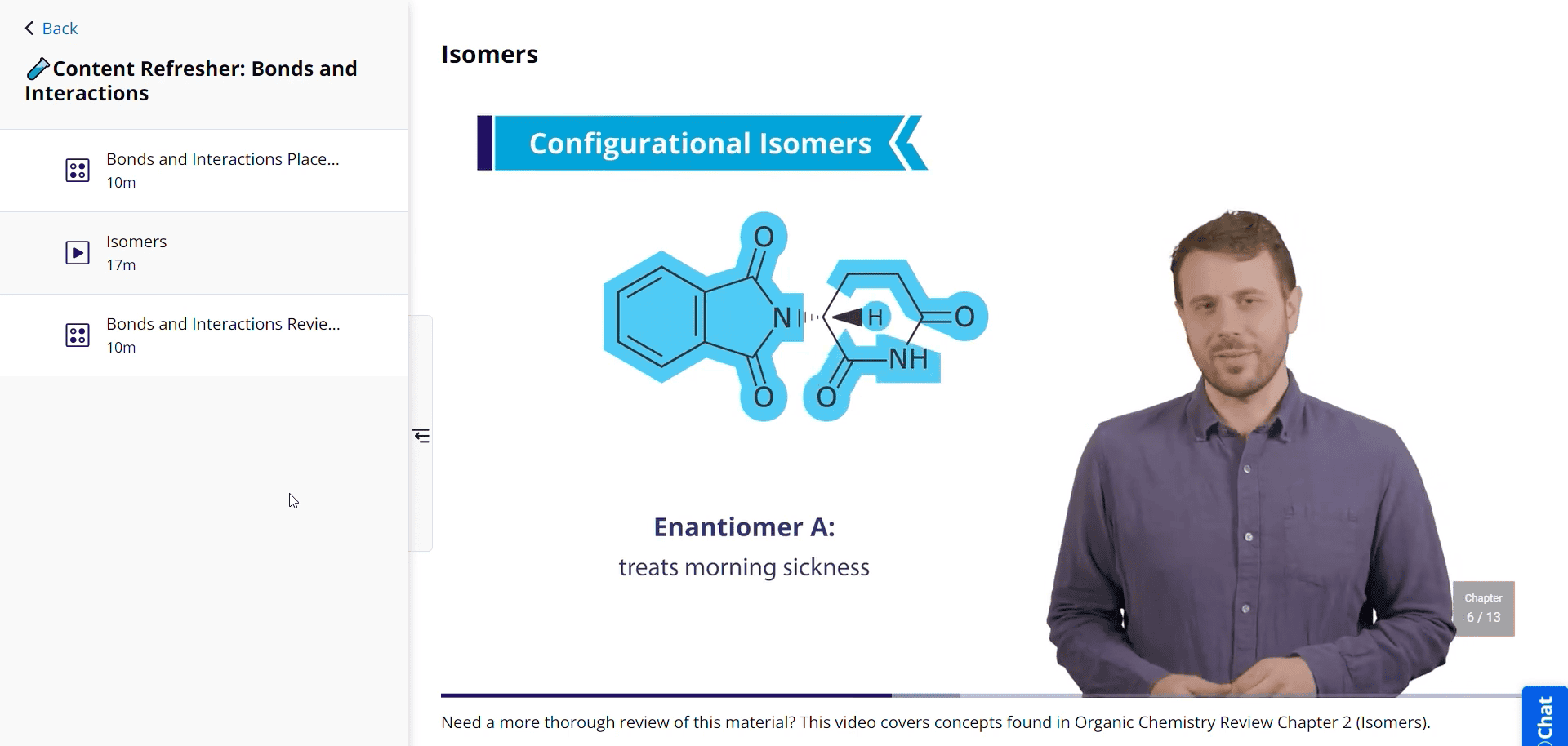
- 90+ Content Refresher Videos: Covering the highest-yield MCAT topics
- Smart Reports: Tracks your strengths, weaknesses, and suggests areas for improvement
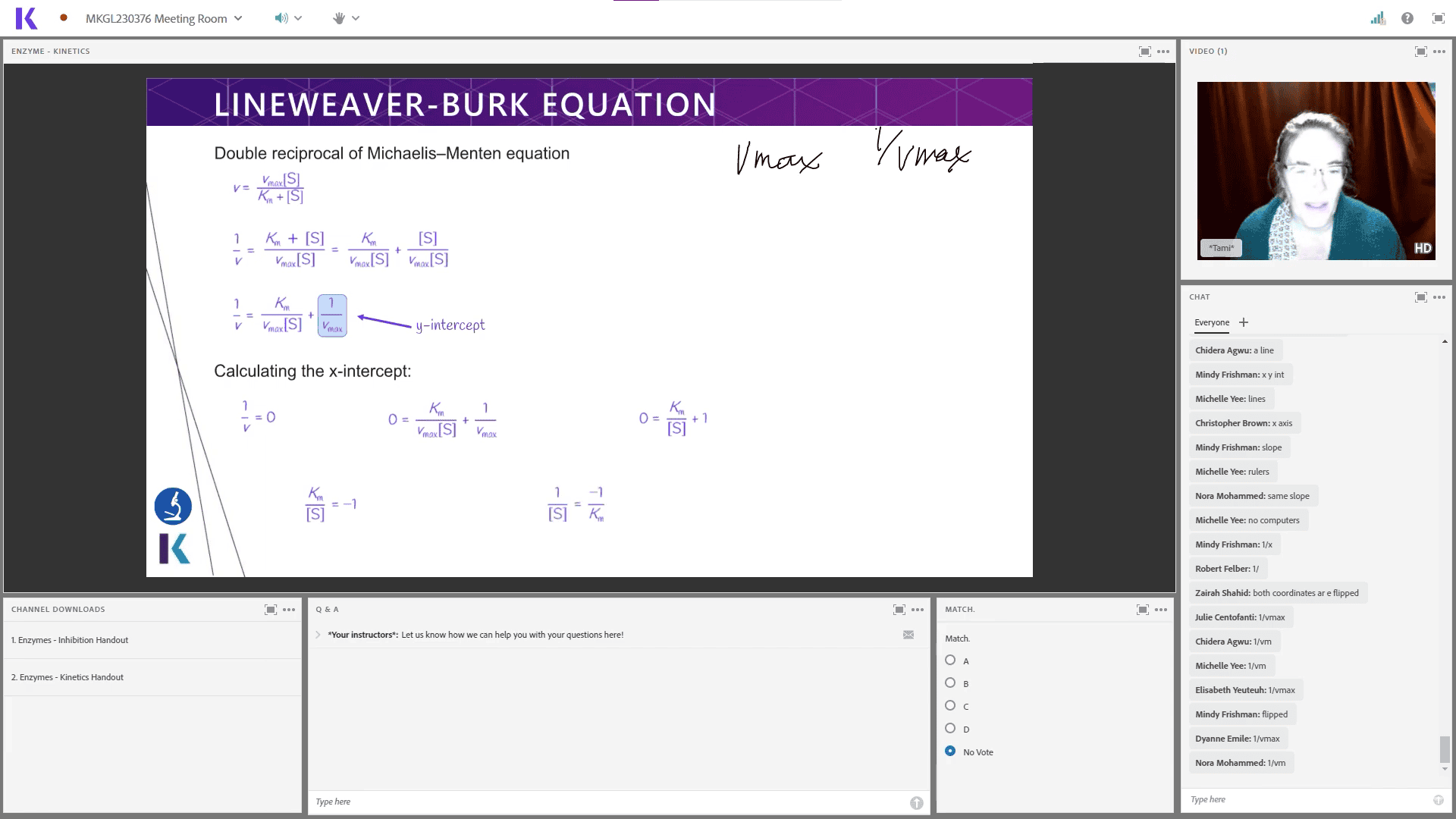
- Access to Unlimited Livestreamed Workshops: Including in-depth MCAT CARS strategy workshops
- Kaplan's AI Tutor: Providing instant personalized study tips and content explanation breakdowns
- Higher Score Guarantee: Retake or refund if your score doesn't improve
Blueprint (formerly Next Step) is a more modern and technology-driven MCAT prep platform, known for its visual learning approach, powerful analytics, and adaptive tools. Key features include:
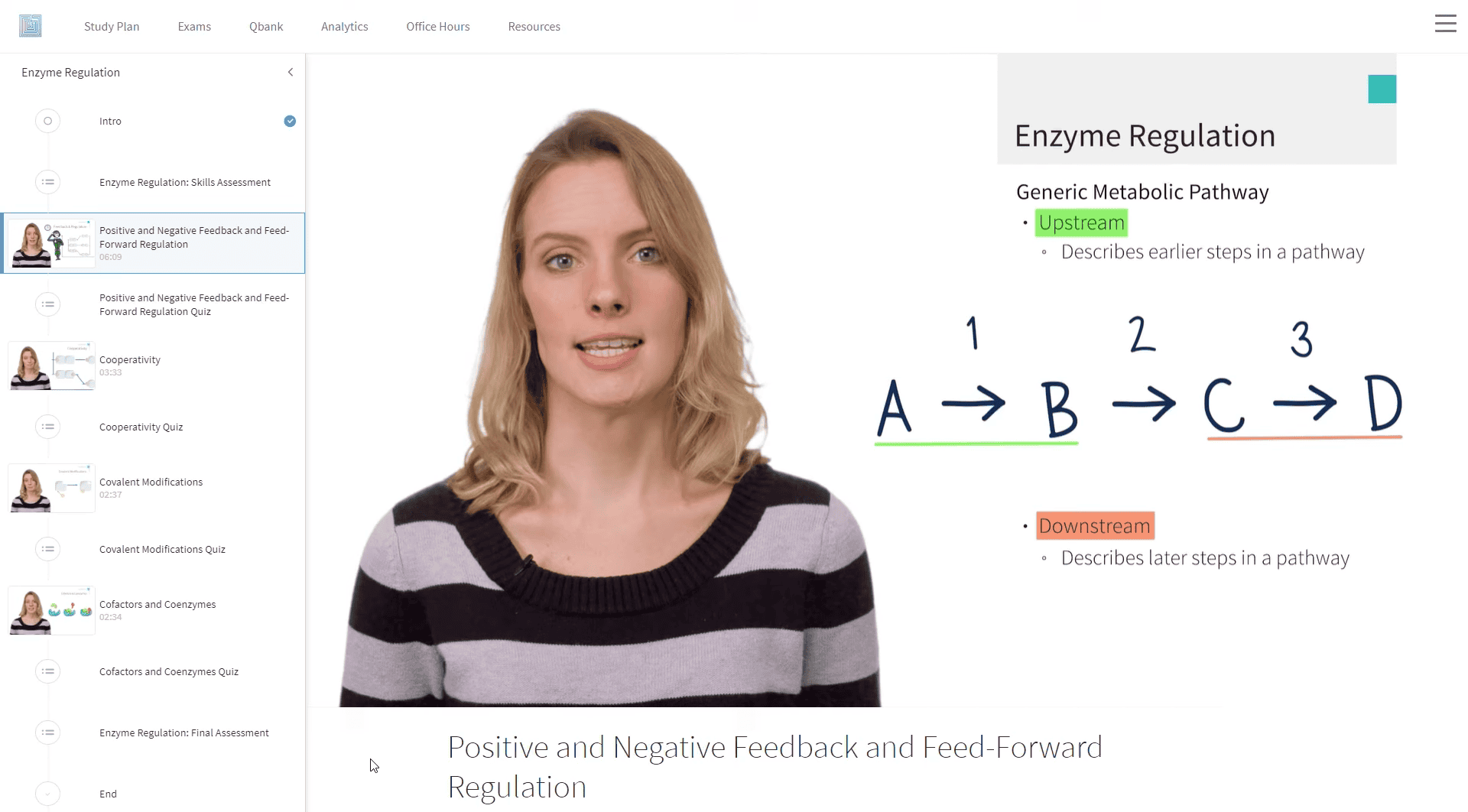
- Interactive, Visually-Rich Video Lessons: 160 learning modules covering both content and test-taking strategies
- Adaptive Learning Technology: Personalizes the study experience
- Customizable Study Plan: AI-driven daily planner adapts to your pace and performance
- 6 MCAT Content Review eBooks: Included with all plans
- 1,600+ High-Yield Flashcards
- 15 Full-Length Exams
- Large AI-powered Qbank: 5,000+ questions with smart filters and video explanations
- Robust Analytics Dashboard: Visually tracks performance, time spent, and accuracy by topic
- Live Review Sessions: 6 days/week support from MCAT experts
- Modern UI: Clean, intuitive platform that's easy to navigate and mobile-friendly
- Score Increase Guarantee: Restart the course or get your money back if your score doesn't improve
Detailed Comparison
Pricing & Value
Kaplan's pricing starts at $1,599 for the 4-month On Demand course, with higher-tier options scaling to $7,299 for Online Bootcamp and from $3,599 for tutoring bundles.
| Course Type | Duration | Price |
|---|---|---|
| On Demand Course | 4 months | $1,599 |
| Live Online Course | 6 months | $2,699 |
| In-Person Course | 6 months | $3,199 |
| 515+ Course | - | $3,599 |
| Private Tutoring + Live Online | - | From $3,599 |
| Online Bootcamp | 5 weeks | $7,299 |
While on the higher end, Kaplan offers extensive MCAT content with a 7-book prep set, 21 full-length practice tests, and 400+ explainer videos for challenging AAMC practice questions. The broad format choices and AI tutor support add value, especially for students seeking flexibility and comprehensive resources.
Blueprint's pricing starts at $1,099 for the Self-Paced course, with Live Online from $1,899, 515+ from $2,399, and tutoring from $3,419.
| Course Type | Duration | Price |
|---|---|---|
| Self-Paced Course | 3, 6, or 12 months | From $1,099 |
| Live Online | - | From $1,899 |
| 515+ Course | - | From $2,399 |
| Private Tutoring | - | From $3,419 |
Blueprint offers strong value through engaging MCAT video lessons, adaptive tech-driven study plans, a large Qbank (5,000+ questions), and a robust analytics platform. Its focus on quality visuals, critical reasoning skills (especially CARS), and personalized learning paths provides an efficient study experience at a competitive price.
If Blueprint is the option you are leaning toward, check the current Blueprint MCAT discount page before treating these numbers as your final cost.
Winner: Blueprint - More affordable entry point with comparable features and superior adaptive technology.
Curriculum
Kaplan's curriculum is content-heavy, strategy-forward, and comprehensive, designed to cover every topic tested on the MCAT in depth. It incorporates 7 physical prep books that serve as foundational study materials. The detailed subject review provided in the Kaplan MCAT books is simply unmatched.
The Kaplan curriculum often follows a classic "read, watch, practice" cycle. You read the detailed books, watch on-demand video lessons, and then work through a large volume of practice questions. Their instructional approach is a blend of live classes, traditional lecture-style videos, physical books, and livestreamed workshops.
Overall, this platform emphasizes thorough content review paired with ample practice questions to build mastery. The approach suits students who prefer structured learning with clear, detailed explanations and multiple formats for study. The sheer volume of material, however, can sometimes feel overwhelming.
Blueprint's curriculum is a modern take on MCAT prep, prioritizing concept visualization, engagement, and data-driven efficiency. The platform focuses on an engaging, visual, and strategy-driven curriculum that prioritizes understanding over rote memorization.
The entire MCAT content is broken down into 160 distinct learning modules. Each module is self-contained and very interactive, with quizzes and drills seamlessly integrated into each lesson to reinforce concepts immediately. This modular format allows for a more focused and less overwhelming study experience.
The hallmark of Blueprint's curriculum is its highly produced, animated video lessons. These vibrant "edu-tainment" videos use graphics, illustrations, and animations to make complex topics easier to understand and retain. Blueprint places strong emphasis on critical reasoning skills, especially CARS, integrating strategy lessons throughout.
Winner: Tie - Kaplan excels in depth and traditional content review; Blueprint excels in engagement and adaptive learning.
Learning Style
Kaplan is well-suited for students who thrive in structured, multi-format learning environments. Its extensive content review and detailed explanations cater to students who prefer comprehensive, methodical study and benefit from repetitive reinforcement. The presence of live workshops also supports learners who value direct interaction and immediate instructor feedback.
With Kaplan, there's generally many details and more reading/writing involved, making it a strong choice for learners who like to dig deep, to have more context, or those who prefer to read, annotate, and take notes for thorough understanding.
Blueprint is ideal for learners who engage best with visual and interactive content. The short engaging modules, featuring animated video content and interactive quizzes built in right after lessons, make Blueprint a great choice for learners who do well with visuals, bite-sized content, and frequent engagement.
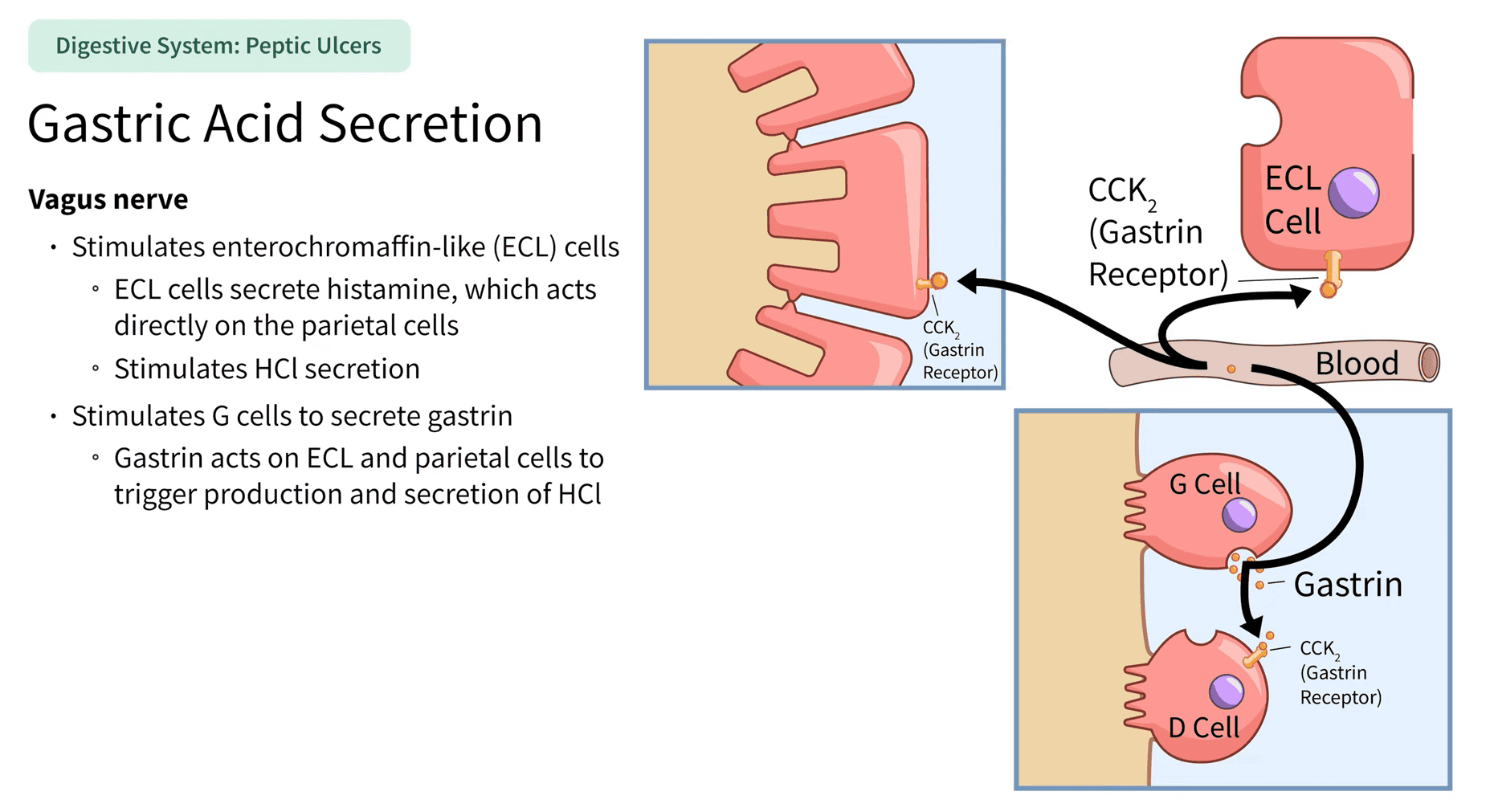
The platform's strong analytics and adaptive learning technology (adaptive Qbanks and real-time schedule adjustments) provide personalized learning pathways allowing you to focus on your weaknesses efficiently. Blueprint also emphasizes strategic thinking and problem-solving.
Winner: Depends on learning style - Kaplan for traditional learners; Blueprint for visual/adaptive learners.
CARS Coverage
Kaplan integrates CARS instruction within its broader curriculum. They provide dedicated strategy workshops and practice passages, but it's not a standalone, dedicated focus. Its approach emphasizes gradual skill-building through repeated practice and thorough breakdowns of question types and reading strategies.
Kaplan's CARS practice is closer to the AAMC in terms of inference types, argument types, and reasoning level than some third-party providers. The wording, structure, and pacing are generally more aligned with what you'll face in the real exam. The CARS strategy offered by Kaplan is more conservative, with more gradual scaffolding.
Blueprint has a more dedicated focus on CARS, and the platform's CARS instructional videos are highly praised. They use visually engaging videos and step-by-step explanations to break down how to approach different passage genres, how to deconstruct arguments, and how to identify the author's tone and purpose.
Their focus is on teaching the "why" behind the reasoning, not just the "how", making it an ideal choice for students who need to improve reasoning techniques. Blueprint's CARS passages/questions are generally more challenging than AAMC, featuring more inference-heavy question choices and denser passages - good for "over-training."
Winner: Blueprint - More dedicated, strategy-heavy, and visually rich CARS instruction.
Practice Materials
Kaplan provides a massive volume of practice, allowing students to tackle a huge number of questions to build content mastery and stamina.
- Question Bank: 10,000+ total practice questions, including a 3,000+ customizable Qbank
- Full-Length Practice Tests: 21 full-length practice tests, 14 Kaplan-built plus the 7 official AAMC exams (the largest supply of any major MCAT provider)
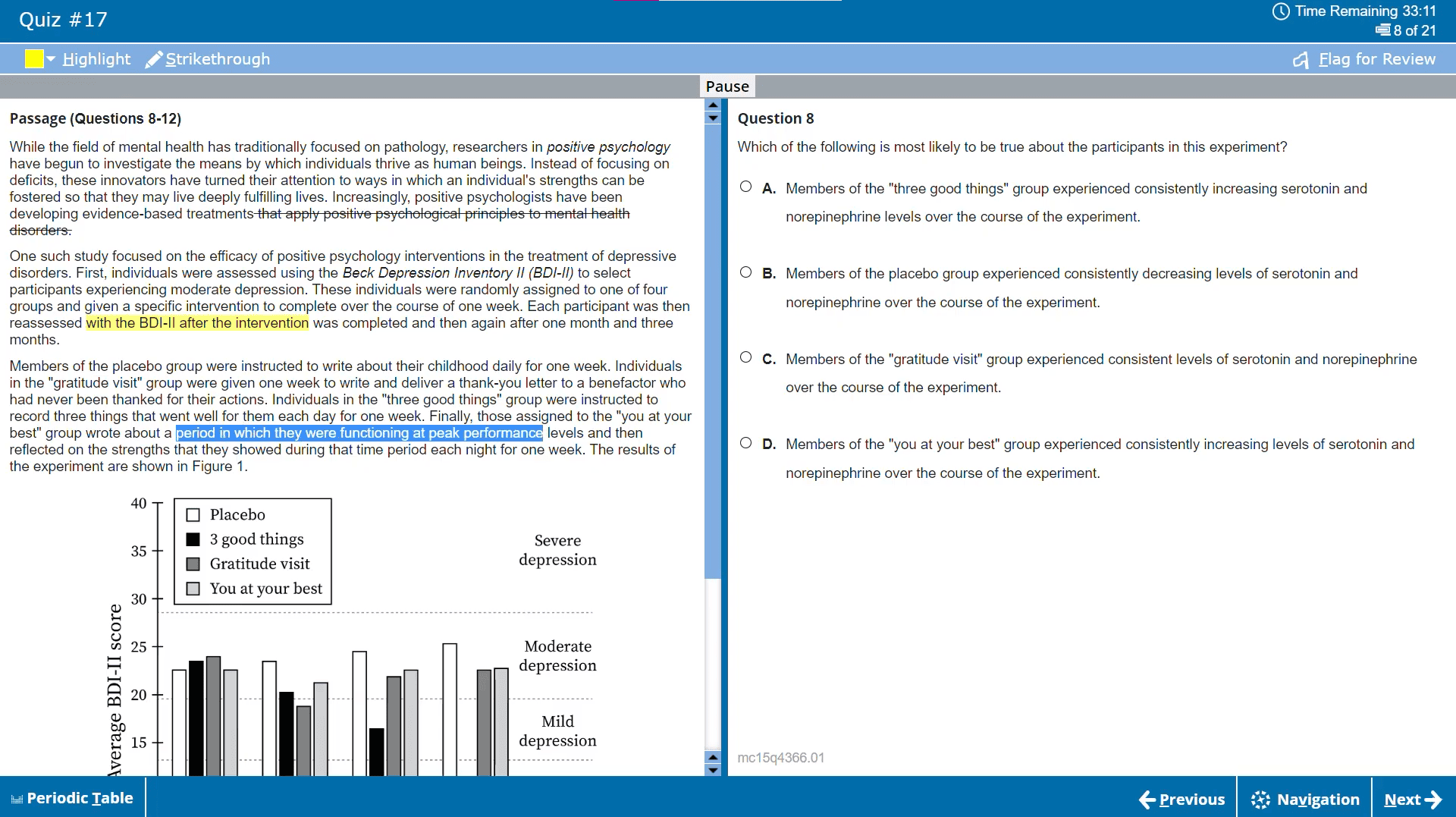
Blueprint focuses on the quality and challenge of its practice materials.
- Question Bank: Over 5,000 practice questions with an adaptive algorithm for personalized quizzes
- Full-Length Practice Tests: 15 full-length practice tests, widely regarded as the most representative of the actual MCAT
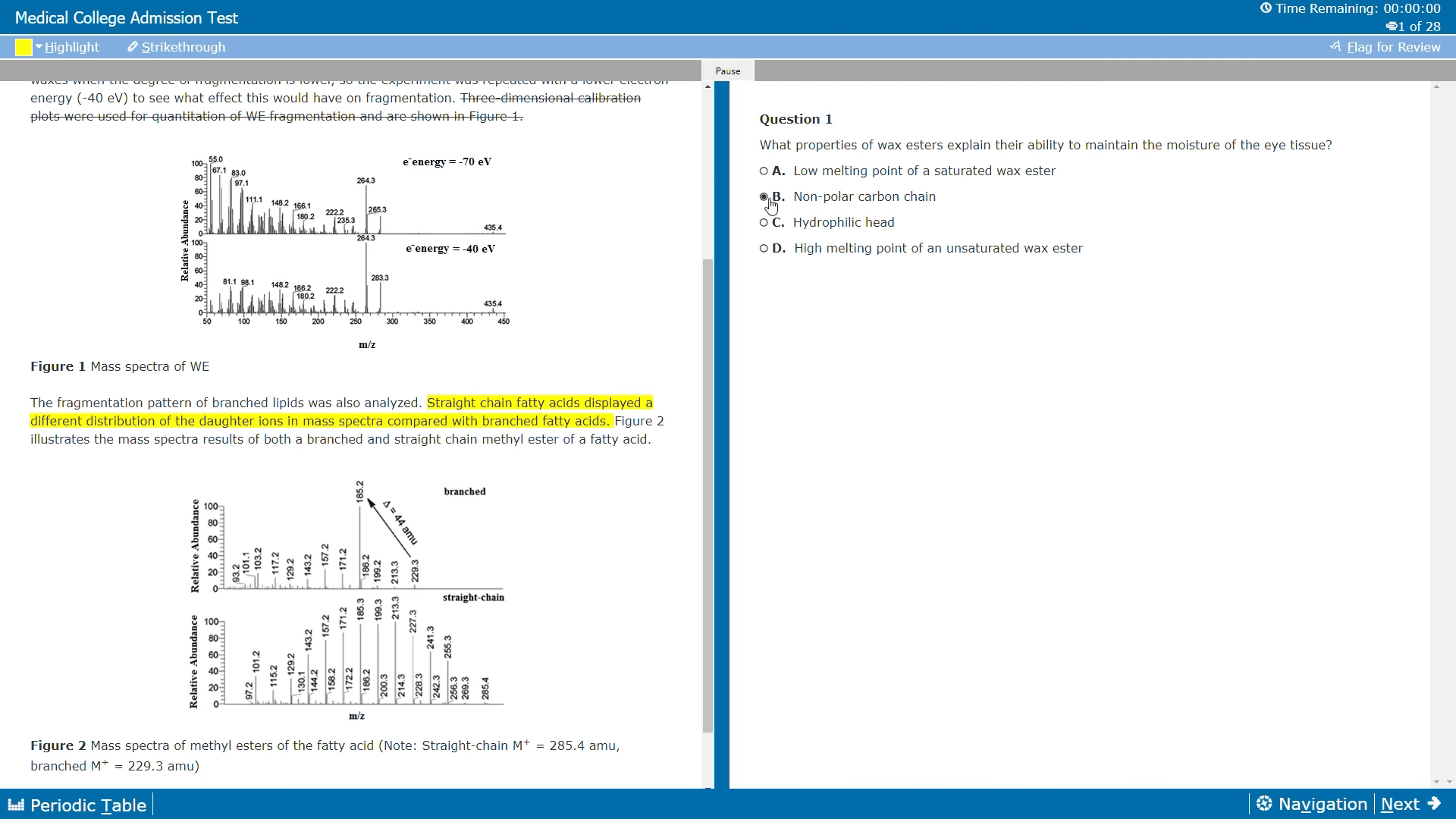
Winner: Kaplan for quantity; Blueprint for quality and realism
Answer Explanations
Kaplan provides strong answer explanations that are thorough and content-rich, breaking down the reasoning behind both correct and incorrect choices. These detailed explanations are great for clarifying content nuances.
Blueprint's answer explanations focus more on strategic reasoning and conceptual clarity. They are concise but effective, highlighting reasoning, trap-awareness, and how wrong answers differ. With some questions including video breakdowns, Blueprint's answer explanations have strong reasoning emphasis, often highlighting common pitfalls and critical thinking steps.
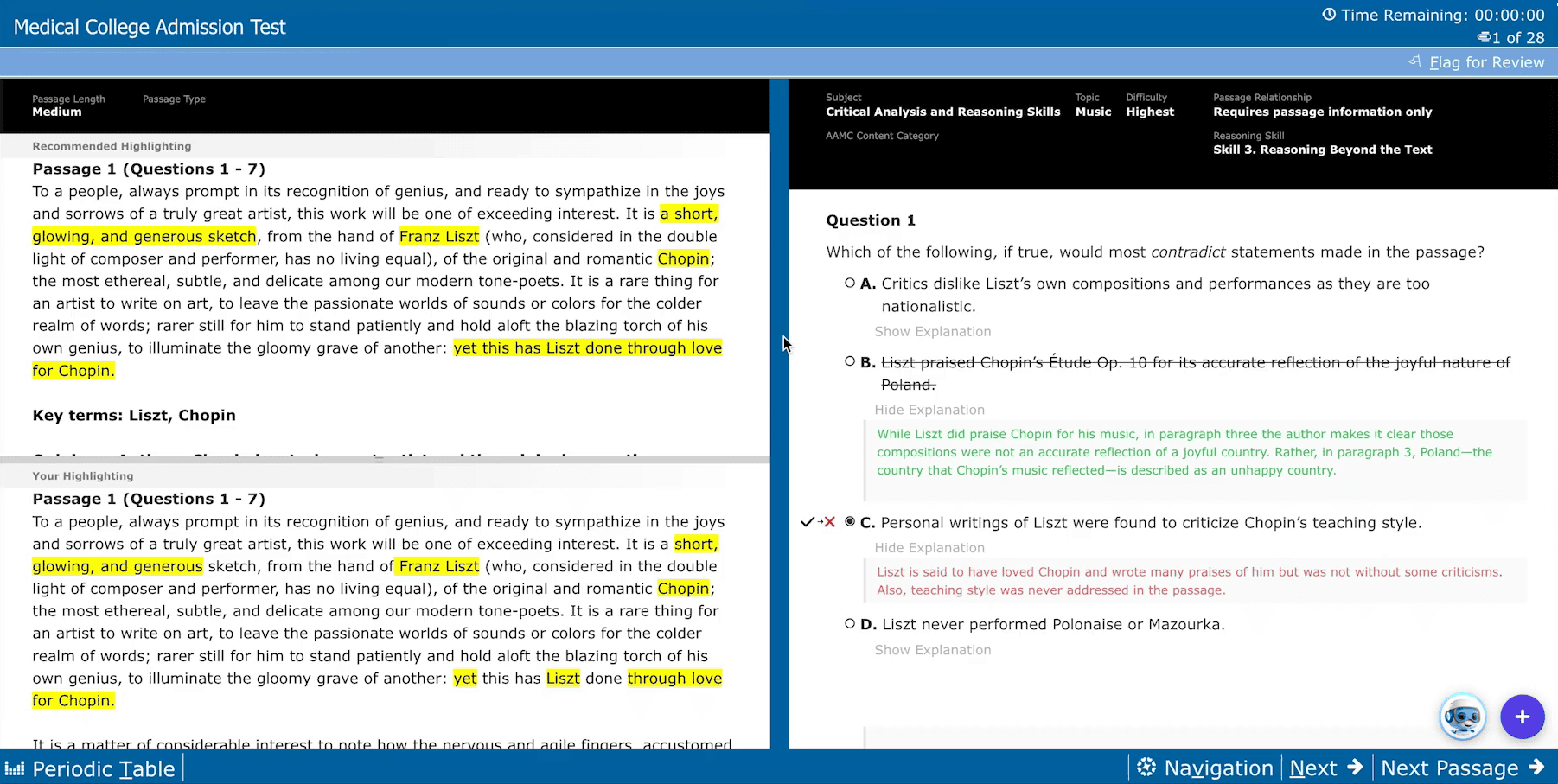
Winner: Tie - Kaplan for content depth; Blueprint for strategic thinking.
MCAT Books
Kaplan's comprehensive 7-book subject review set provides detailed subject review across all MCAT subjects: Biology, Biochemistry, General Chemistry, Organic Chemistry, Physics & Math, Behavioral Sciences, and CARS.
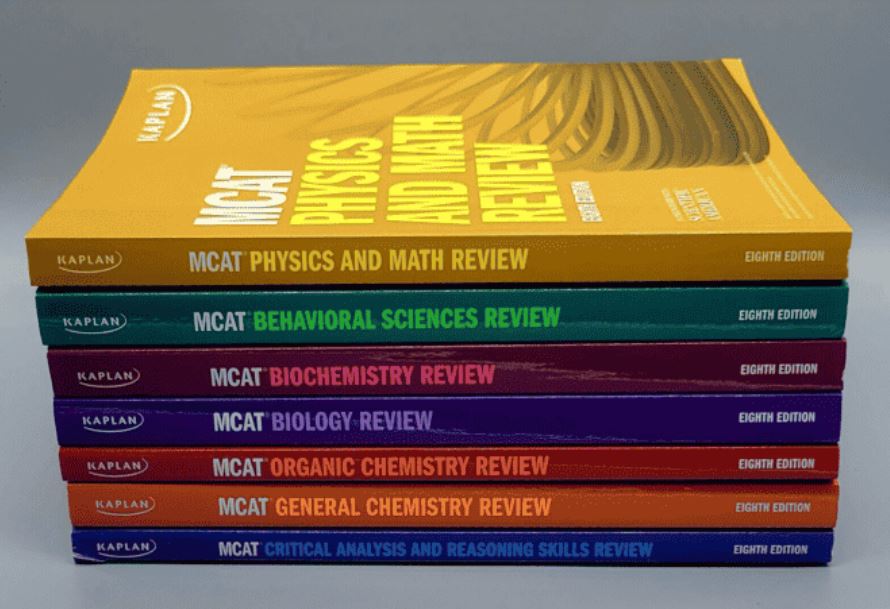
These content-heavy books feature diagrams, illustrations, detailed explanations, memory aids, concept summaries, pre-chapter quizzes, and guided examples. The high-yield material is clearly highlighted using "High-Yield Badges." Kaplan's MCAT books serve as core study materials, offering detailed content review, hundreds of practice questions, and test-taking strategies.
Blueprint offers 6 eBooks designed to complement its online learning modules. Unlike Kaplan's comprehensive guides, Blueprint's books are meant to be a supplementary companion to the video lessons, not the primary source of content. They provide a concise review and are integrated with the online platform.
On the downside, Blueprint's MCAT books are not available for individual purchase and may lack depth in certain topics.
Winner: Kaplan - More comprehensive and detailed physical books.
Study Planning & Analytics
Kaplan provides a structured study schedule that outlines what you should do each day. This is helpful for students who need a rigid, pre-made plan to follow. It's great for accountability and ensures you cover all the material.
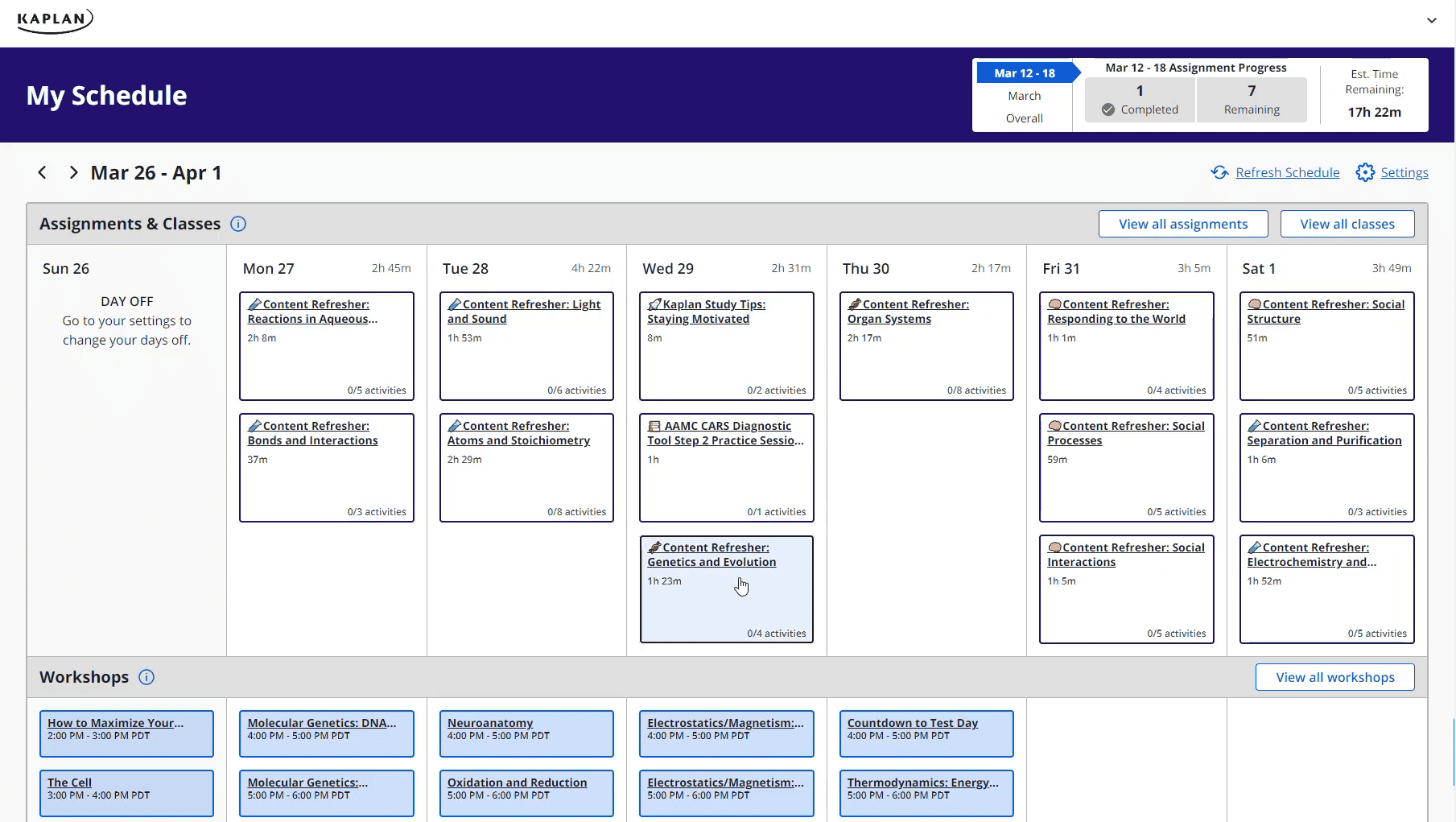
Kaplan's "Smart Reports" give you a good overview of your performance. After a practice test or Qbank quiz, you can see a breakdown of your score by subject and topic.
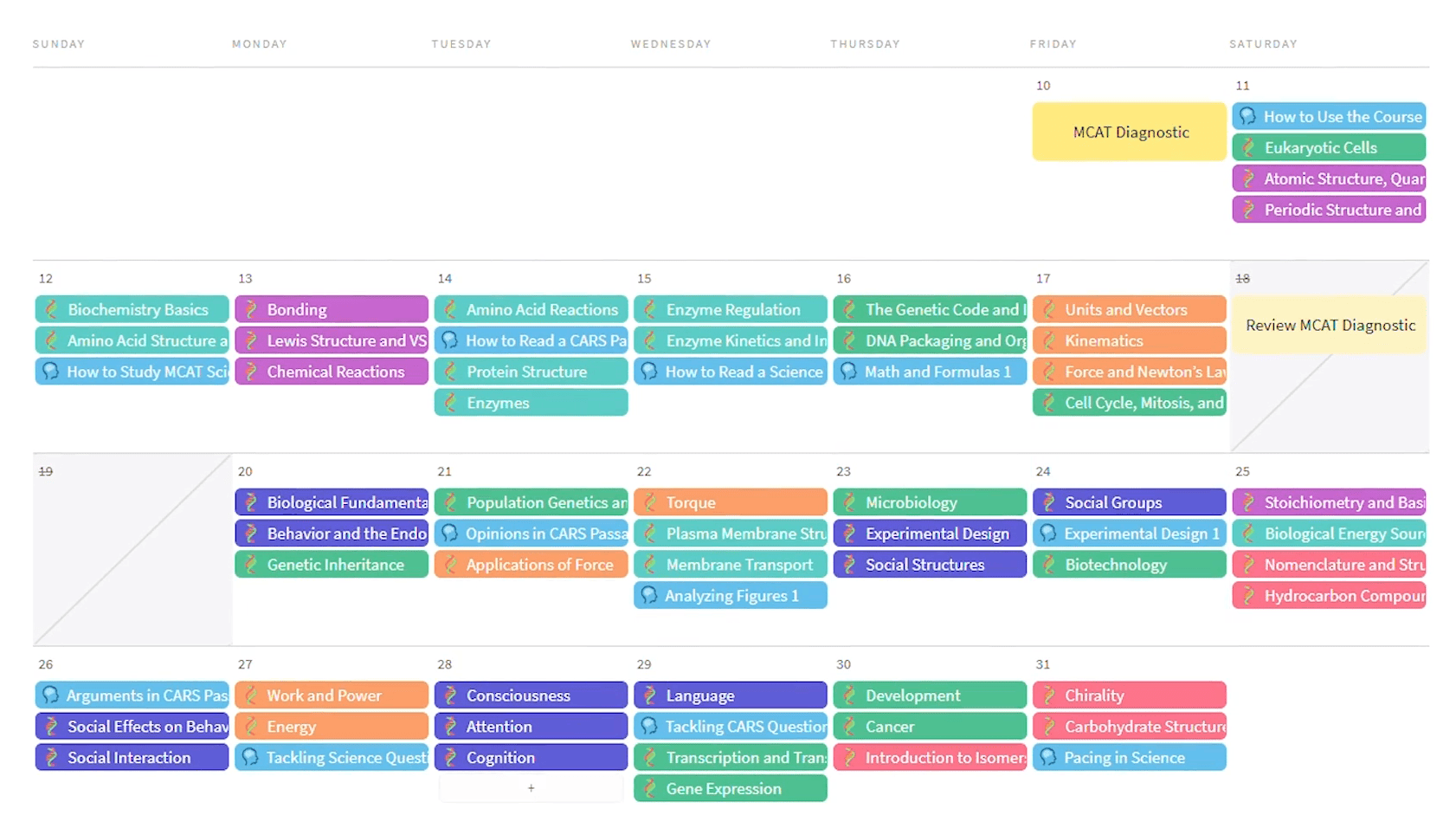
Blueprint's proprietary customizable study planner is arguably its most significant advantage. You input your MCAT test date, your available study hours per day, and any days you want off. The planner then creates a personalized, day-by-day schedule that tells you exactly what to do. It also dynamically adjusts the schedule if you fall behind or get ahead.
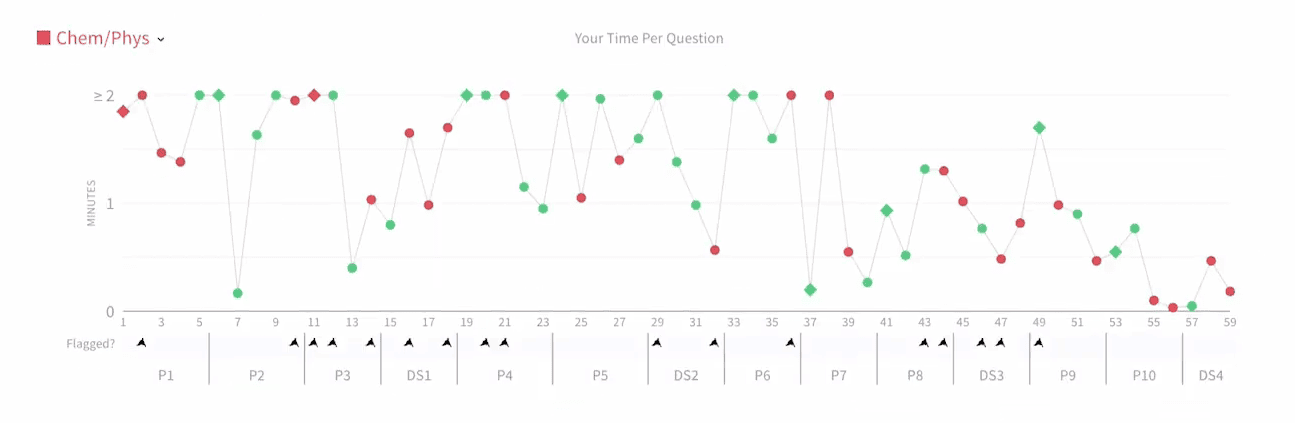
Blueprint's analytics dashboard is exceptional. It provides a deep, data-driven analysis of your performance. After a practice test, the dashboard breaks down not just what you got wrong, but why. It shows you specific content areas where you struggle, whether you're having trouble with reasoning skills or passage analysis, and even whether your timing is an issue.
Winner: Blueprint - Superior adaptive study planning and granular analytics.
Score Guarantees
Kaplan's guarantee:
- Higher Score Guarantee applies across MCAT prep offerings (with eligibility requirements)
- 515+/15-point money-back guarantee applies to select premium plans (515+ Course, Premium Tutoring, and Bootcamp), based on baseline score and completion requirements
Blueprint's guarantee:
- Self-paced course: score increase guarantee (restart course or refund if terms are met)
- 515+ and tutoring offerings include higher-score guarantee terms on eligible plans
Winner: Tie - Both providers offer meaningful guarantees, but terms vary by plan and eligibility.
Kaplan MCAT Pros & Cons
Pros
- Broad course formats, including in-person courses and bootcamps
- In-depth content coverage with plenty of background and detailed review
- Extensive number of full-length practice tests (18)
- 7 highly-rated physical MCAT prep books providing detailed content review
- Very structured learning path with a clear roadmap
- Strong guarantee coverage, including premium 515+/15-point guarantees on select plans
Cons
- The sheer volume of resources can be overwhelming
- Video lessons can be rather static and lecture-like compared to modern competitors
Who Should Choose Kaplan MCAT?
- You can commit time and energy towards heavy study material
- You want deep, wide coverage of MCAT topics plus lots of practice
- You prefer structured guidance with a clear roadmap and scheduled classes
- You're looking for strong test-taking strategies
- You enjoy dense reading, long textbooks, and physical study materials
Blueprint MCAT Pros & Cons
Pros
- Adaptive, personalized study plans tailored to individual strengths and weaknesses
- Highly engaging, visually rich video lessons that simplify complex concepts
- Realistic practice that's representative of the official AAMC MCAT
- Strong focus on strategic thinking and critical reasoning, especially for CARS
- Modular study format with small, digestible sections
- Top-tier analytics dashboard provides in-depth, data-driven performance insights
Cons
- Guarantees are more demanding in terms of required effort and module completion
- Less detailed eBooks designed as supplementary material, not stand-alone study material
Who Should Choose Blueprint MCAT?
- You prefer a visually engaging, video-focused learning experience
- You want an adaptive study program that personalizes content based on strengths and weaknesses
- You wish to strengthen your critical reasoning skills, especially in the CARS section
- You are a data-driven learner who needs detailed, granular analytics
Final Verdict
Both Kaplan and Blueprint stand out as top-tier MCAT prep courses in 2026, but the better choice depends largely on individual learning styles and study habits.
Kaplan MCAT is best suited for students who prefer a traditional, structured approach to content review. It offers in-depth subject coverage, plenty of full-length practice exams, and robust highly-detailed physical MCAT books - ideal for those who learn best through reading and note-taking. Kaplan is especially valuable if you appreciate a more guided, linear study plan and want access to experienced instructors and well-established prep frameworks.
Blueprint MCAT stands out for its modern, highly visual, and interactive learning platform. It's a better fit for students who are self-motivated, tech-savvy, and benefit from video-based instruction, modular learning, and adaptive study tools. Blueprint offers powerful analytics to track weaknesses, customizable study plans, and detailed performance feedback, making it ideal for self-studiers aiming for high MCAT scores or major score improvements.
Ultimately, choose Kaplan if you want maximum study resources, structured pacing, detailed content review, and realistic test-day simulation. Choose Blueprint if you want efficient, strategy-focused prep with adaptive tech and strong CARS support.
FAQs
Which MCAT Course Offers More Realistic Full-Length Practice Exams?
Kaplan tends to provide more full-length exams overall (18 vs 15), with practice tests designed to closely mimic AAMC pacing and style. Blueprint's exams are often slightly more difficult in some sections (especially reasoning or inference) than AAMC, which can be good for stretch prep.
How Do Kaplan And Blueprint MCAT Compare In Curriculum?
Kaplan delivers comprehensive, content-heavy curricula with 7 physical books, ideal for thorough review. Blueprint focuses on visually engaging videos and adaptive learning, emphasizing critical reasoning and efficient studying.
How Does Each Program Handle CARS Prep?
Blueprint has a more targeted and effective approach to CARS with dedicated modules and strategies specifically for this section. Kaplan's CARS coverage is good but integrated into the broader curriculum and lacks Blueprint's dedicated focus.
We may earn commissions from some links on this page, but this does not affect our reviews or your experience.
Our Verdict
Blueprint wins for most students due to its adaptive learning technology, engaging video content, and superior analytics. However, Kaplan is better if you prefer structured, content-heavy preparation with comprehensive physical books.
Learn more about Kaplan
Read our full review →
Learn more about Blueprint
Read our full review →